By Chantra Eskes, Valérie Zuang & Thomas Hartung, ECVAM
Historical background
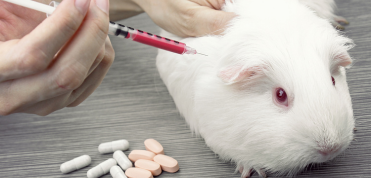
The in vivo test currently used for determining the irritant and corrosive potential of chemicals is the rabbit eye test developed by Draize in the 40's (Draize et al., 1944; OECD TG 405, 2002). In this test, test materials are applied to the conjunctival sac of the animal's eye, and subsequent physiological responses are classified by visual examination of the cornea, iris and conjunctiva, and given a numerical score. The test can be very painful to the rabbits and has several other shortcomings such as subjectivity in the allocation of the respective scores which contribute to the low interlaboratory reproducibility (Lordo et al., 1999; Ohno et al., 1999; Weil and Scala, 1971), uncontrolled and non-standardized exposure conditions (Prinsen, 2006), and differences in sensitivity to tested substances between rabbits and humans (Freeberg et al., 1986; Christian and Diener, 1996).
Perhaps because of the cruelty and the high public concern of such testing procedures, eye irritation has been a pioneer field in which major efforts were undertaken as early as the 1980's and 1990's to develop, evaluate and validate in vitro methods to replace the Draize Eye Irritation test (Balls et al., 1995; Gettings et al., 1991, 1992, 1994, 1996; Brantom et al., 1997; Spielmann et al., 1993, 1996; Bradlaw et al., 1997; Ohno et al., 1999). At that time some assays showed good reproducibility and reliability, but no single method was found able to replace the Draize rabbit eye test. The main potential reasons identified for such an outcome were: a) the variability of the in vivo eye irritation responses, which are linked to the subjectivity of scoring and variability of animal responses; b) the in vitro tests, which only partially model the complex in vivo eye irritation response; c) the protocols and prediction models, which might have been insufficiently developed at that time; and d) the choice of statistical approaches for analyzing the data, which might not have been appropriate (Balls et al., 1999).
Though not formally validated, the usefulness of the in vitro methods that have undergone extensive evaluation has been established within regulatory agencies, industry and contract research organizations for specific and limited purposes (Worth and Balls, 2002). In particular, the EU National Coordinators of Testing Methods of Annex V to Directive 67/548/EEC have accepted since 2002 a positive outcome for identifying severe eye irritants from the following assays: the Isolated Rabbit Enucleated Eye test (REET), the Isolated Chicken Eye (ICE) test, the Bovine Corneal Opacity & Permeability (BCOP) test, and the Hen's Egg Test – Chorio-Allantoic Membrane (HET-CAM). However, where a negative result is obtained, an in vivo test is required (EC, 2004).

Over the years, modifications to the in vivo Draize test have also been proposed in order to reduce the pain to be endured by the animal and to achieve higher rates of recovery. An example is the low volume eye test (LVET), in which only a tenth of the sample volume used in the standard Draize test is applied to the cornea and the eyes are not held shut after instillation of the test material (Freeberg et al., 1986). Moreover in May 2005, ICCVAM organised a symposium on "Minimizing pain and distress in ocular toxicity testing". Its objective was to identify, based on the current understanding of the sources and mechanisms of pain and distress, the best practices and where additional research and evaluation are needed in order to avoid and alleviate ocular pain and distress in ocular toxicity testing.
Reduction and refinement approaches are included in a sequential testing strategy as published in a supplement to OECD TG 405 and EC B.5 (OECD, 2002; EU, 2004), and as recently developed within the framework of the REACH Implementation Projects (Anonymous, 2007). In these sequential strategies the in vivo rabbit eye test needs only to be performed as a possible last step, i.e. when the assessments in all the other tiers have produced negative results, and whereby only one animal is required for the testing of severe eye irritants. However, these strategies do not eliminate the need for an in vivo test, and there is potential for over-classification of the eye irritancy potentials of chemicals.
Needs for non-animal testing
In recent years, considerable changes in the political environment brought by both the EU 7th Amendment to the Cosmetics Directive and by the EU new chemicals regulation call for a timely development and validation of alternative test methods and testing strategies to replace animal testing. In particular, the 7th Amendment to the Cosmetics Directive, adopted in 2003, foresees an immediate ban on animal testing for finished products, and a complete ban on animal testing for cosmetic ingredients no later than 6 years from the implementation of the Directive, i.e., 2009. Moreover, it requires an immediate marketing ban on new cosmetics (finished products and ingredients) tested on animals, where alternative methods validated by the European Centre for the Validation of Alternative Methods (ECVAM) and accepted by the Community exist, and a complete marketing ban on cosmetics tested on animals within 6 years (i.e., 2009) for all targeted human health effects, with the exception of repeated-dose testing, reproductive toxicity and toxicokinetics, for which a deadline of 10 years after entry into force of the directive (i.e., 2013) is foreseen (EU, 2003).
Furthermore, the new EU Regulation for the Registration, Evaluation and Authorisation of Chemicals (REACH) requires the testing of new and approximately 30,000 existing substances that are currently marketed in volumes greater than 1 tonne per year. The extent of the data requirements depends on the tonnage of chemical produced in or imported into the EU. In particular, in vitro tests are requested as base-set testing for eye and skin irritation, and could represent the testing of up to 20,000 existing chemicals marketed in volumes between 1 and 10 tonnes per year (EU, 2006).
Beside the ethical aspects and the public concern, economical and time considerations as well as consumer health protection are all aspects that strongly call for the timely development and validation of non-animal alternative tests and testing strategies including those for eye irritation.
Progress in the validation of alternatives to eye irritation
To advance the validation of in vitro alternatives that might ultimately replace the Draize rabbit eye test, it is necessary to acknowledge that the range of criteria for injury and inflammation covered by the Draize rabbit eye test is unlikely to be covered by a single in vitro test. For this reason, ECVAM organised an expert meeting in February 2005 to identify potential test strategies based on the current uses and applicability of in vitro methods to eye irritation. The meeting involved more than 30 participants from industry, regulatory bodies, contract laboratories, academia and animal welfare groups. Participants were requested to nominate test methods for eye irritation for a specific applicability domain, to provide supportive in vitro and in vivo data, and to identify potential test strategies to assess eye irritation based on their experiences and uses of the test methods. Promising testing strategies have been proposed which combine in vitro assays in a tiered approach to address required ranges of irritation potential and/or chemical classes (Scott et al., in preparation).
To identify the most suitable assays that will serve as the building blocks for such strategies, the performances and applicability domains of individual alternative methods are being evaluated by retrospective and prospective validation studies as described below. These assays comprise organotypic models, cytotoxicity- and cell function- based assays and human reconstituted tissue models, amongst others (Eskes et al., 2005). The ECVAM area of eye irritation has established close collaboration with ICCVAM, COLIPA (European Cosmetic, Toiletry and Perfumery Association) and industry in general to facilitate: a) the validation of such alternative methods in the most efficient way, b) harmonization of scientific positions, and c) avoidance of work duplication. In addition, a comprehensive evaluation of the characteristics of the in vivo responses from the Draize rabbit eye test is being carried out to compare with the performances of single and combined in vitro assays.

A retrospective validation of the organotypic assays (i.e., BCOP, ICE, REET and HET-CAM) was initiated in 2003 and has been recently finalised. The goal was to evaluate the ability of these assays for detecting severe eye irritants and ocular corrosives. The study was led by ICCVAM-NICEATM following an EPA nomination and was carried out in collaboration with ECVAM. After peer review by an Expert Panel, final recommendations on these assays were made available in autumn 2006. Two organotypic assays, the BCOP assay and the ICE test, were formally considered as suitable assays in the EU and in the US to be used, in appropriate circumstances, to identify ocular corrosives and severe irritants (ICCVAM, 2006; ESAC, 2007). Guidance documents on their use are currently under preparation. With regard to the two other organotypic assays, the HET-CAM and the REET, the ECVAM's Scientific Advisory Committee (ESAC) requested that further work and reanalyses be performed before a statement on their validity to identify severe eye irritants could be made. Furthermore, the evaluation of the validity of the four assays for identifying mild and non irritants is still required.
For the cytototoxicy- and cell function- based assays (i.e., the Neutral Red Release, Red Blood Cell test, Fluorescein Leakage assay and Cytosensor Microphysiometer), an ECVAM retrospective validation was initiated in October 2005 and is expected to be finalised in 2008. The study, coordinated by an international Validation Management Group (VMG), is based on the retrospective collection of existing data compiled according to the ECVAM Modular Approach to validation and weight-of-evidence principles (Hartung et al., 2004; Balls et al., 2006). Based on the final results, the VMG will evaluate whether there is sufficient qualified evidence to support the validity of the methods, and proceed towards a peer review by ESAC.
Two human reconstituted tissue models, the SkinEthic Human Corneal Epithelium (HCE) and the EpiOcularTM models, have undergone corporate prevalidation study and validation study, respectively, on surfactants. The studies were reviewed by the ECVAM Eye Irritation Task Force, which recommended protocol improvements and the organisation of a workshop to plan for a formal validation study to evaluate the validity of the SkinEthic HCETM assay and to enlarge the applicability domain of the EpiOcularTM model. The two assays are currently undergoing protocol optimisation and assessment in a multi-industrial trial coordinated by COLIPA. When available, the findings from the multi-industrial trial will be used for planning a formal ECVAM validation study.
Additional assays which were submitted to ECVAM are also currently under evaluation. These encompass the Low Volume Eye Test (LVET) as a refinement assay, the Ocular Irritection® assay and the Slug Mucosal Irritation assay. With regard to the LVET, a first submission was received in 2003 and reviewed by the ECVAM Task Force on Eye Irritation. Following the request for further information and the recommendations made, a final dossier was submitted to ECVAM in February 2007 based on the retrospective compilation of evidence according to the Modular Approach. The assay is currently under peer review by ESAC. With regard to the Ocular Irritection® assay, a first submission was received in 2004, and currently a dossier based on retrospective and prospective information is being prepared according to the Modular Approach to validation by the test method submitter. Finally, with regard to the Slug Mucosal Irritation Assay, a prevalidation study has just been finalised and submitted to ECVAM for evaluation.
Although the assays under evaluation appear promising to address some of the required ranges of irritancy and/or chemical classes, they may not address, or not to the same extent, all of the mechanisms of ocular toxicity that occur in vivo. Some examples include reversibility of effects and modelling of the inflammatory responses (Eskes et al., 2005). In particular, a joint ICCVAM-ECVAM symposium was organised in order to identify the current knowledge gaps existing between the in vivo and in vitro mechanisms of ocular irritation for which further investigation and development are recommended (Hamernik et al., 2006). It is therefore important to advance in parallel to the current evaluations, the development of mechanistically-based models that address the current existing mechanistic gaps. The COLIPA eye irritation research program addresses some of these mechanistic features (Jones et al., 2006). In addition, individual efforts exist within the scientific community to develop more complex test systems and biomarkers for eye irritation. ECVAM would like to ensure that the most predictive assays with mechanistic relevance can proceed towards validation according to internationally agreed principles and eventually contribute, in combination with the most advanced assays, to the full replacement of the animal test.
Questions open to discussion
Progress has been made in generating, compiling and evaluating the existing data on the most promising assays. However further efforts are still necessary to finalise such weigh-of-evidence evaluations and generate new data where necessary. Once the evaluations of the individual assays is completed, the results will be combined and statistically evaluated in order to determine the most suitable strategies to classify test substances according to their irritation potential and ultimately replace the Draize rabbit eye test. In addition, the parallel development of biomarkers and/or test methods that might help overcome the mechanistic gaps of the currently available in vitro test systems is encouraged.
Open questions remain nevertheless to be answered with regard to the overall acceptance of non-animal test strategies for eye irritation. Below are some examples.
- It is currently unclear to which extent the regulatory agencies will accept the negative results from validated in vitro tests, and which level of confidence is required for that purpose.
- Although it is well known that the Draize rabbit eye test overpredicts the human responses, it is unclear how such information ought to be considered when evaluating non-animal methods and strategies. In particular, it is unclear what rates of overprediction will be accepted from in vitro methods by regulatory agencies.
- It is practically unfeasible to test all chemical universes during the validation of an alternative method, not least because new types of chemistry or substances will continue to be developed. It is therefore unclear how the applicability domain and limitations of an alternative test can be defined adequately, and what would be an acceptable sample size in order to define the applicability domain and limitations.
- Finally, there is a need to develop clear guidelines on the information needed and principles accepted for the construction and validation of non-animal test strategies.
Having clear answers to such questions would help to streamline the design of validation studies and/or test strategies, to provide non-animal alternatives relevant for the current regulatory and industrial commerce requirements. The EU Integrated Research Project OSIRIS initiated in April 2007 on the optimisation of strategies for risk assessment, might help answer some of the more technical questions related to the building of test strategies; however the more general questions still remain. Because of the ample experience and efforts as well as number of tests available, the area of eye irritation especially qualifies as a pilot for those general developments.
References
Biography
©2007 Chantra Eskes, Valérie Zuang & Thomas Hartung